RSS

Housing Affordability Explained

Housing affordability is a hot topic in Canada — but what does it actually mean?

At its core, housing affordability measures how much of your income goes toward owning a home. A common benchmark is the percentage of income needed to cover mortgage payments, property taxes, and utilities.

For example, RBC Economics tracks affordability by calculating how much of a median pre-tax household income is required to afford a typical home. In cities like Toronto and Vancouver, that number can be over 60%, making homeownership extremely challenging for many families.

To give you a clearer picture, here’s a snapshot of affordability in some Toronto neighbourhoods:

NeighbourhoodMedian IncomeHome PriceAffordability Ratio
Rosedale$120,000$3,000,00025x income
Forest Hill$126,300$2,500,00020x income
Leslieville$90,200$1,400,00015x income
Trinity Bellwoods$90,000$1,800,00020x income
Oakville (town-wide)$136,600$1,400,00010x income
  • High Affordability Ratios: Neighbourhoods like Rosedale and Forest Hill exhibit higher affordability ratios, indicating that a significant portion of household income would be required to purchase a median-priced home.

  • Mid-Range Ratios: Areas such as Trinity Bellwoods and Leslieville have moderate affordability ratios, suggesting a more balanced relationship between income and home prices.

  • Lower Ratios: Oakville shows lower affordability ratios, which may indicate that home prices are more accessible relative to household incomes in these areas.

Affordability ratio here is a simplified price-to-income ratio to illustrate the scale of costs relative to incomes.

Generally, a home is considered affordable if it costs less than 4 to 5 times your household income. As you can see, many Toronto neighbourhoods are far above that.

Why It Matters

When the affordability ratio gets too high, it means buyers may have to stretch their budgets, delay homeownership, or rely on financial help.

Understanding housing affordability can help you make informed decisions about where — and how — to buy. If you’re feeling stuck, you're not alone, and there are strategies to navigate this market wisely.

Want help breaking down what’s affordable for you? Let’s talk.

Read

The Truth About Housing Affordability in Canada: Why the Headlines Aren’t Telling You Everything

Housing affordability is one of the biggest topics in Canada today — and for good reason. For many residents and newcomers, homeownership feels increasingly out of reach. Every day, we see headlines, reports, and politicians throwing around bold claims about the state of our housing market. But for how serious and important this conversation is, it deserves a lot more nuance than it currently gets.

It’s naive to think we can boil down the complexity of our economic and housing systems into a single, one-size-fits-all metric. And yet, that’s exactly what keeps happening.

So let’s unpack the core metric that everyone loves to quote: housing affordability.

The Metric Everyone Cites — But Few Understand

In Canada, housing affordability is most commonly measured using the Home Price-to-Income ratio, or more specifically, the ratio of average home prices to median disposable income.

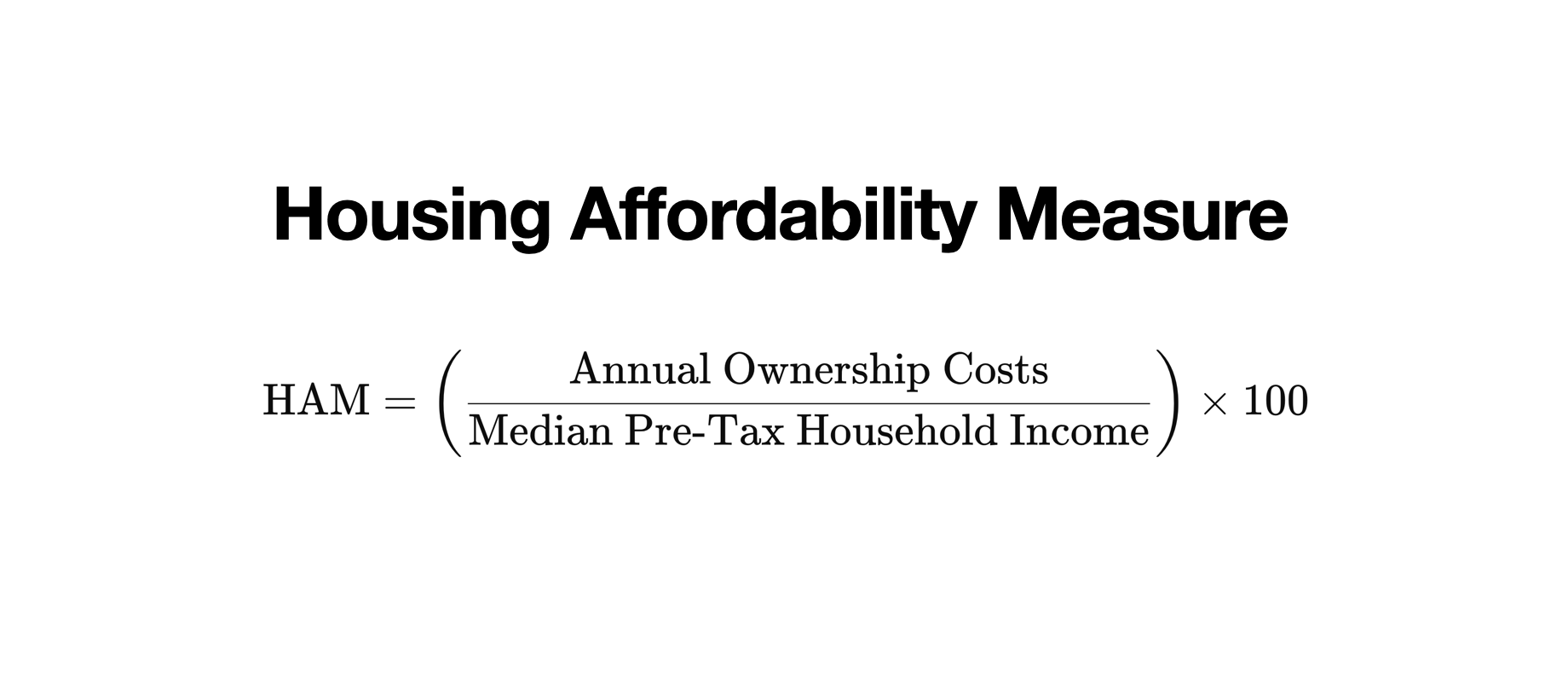
But another widely referenced approach comes from RBC Economics, which calculates housing affordability by determining the proportion of median pre-tax household income needed to cover ownership costs — including mortgage payments, property taxes, and utilities. In this blog post we will stick to the RBC Housing Affordability Measure (HAM) when referring to housing affordability.

Right now, in major cities like Toronto and Vancouver, that number exceeds 60–80% of pre-tax income — levels RBC itself describes as “extremely high.”

Sounds simple, right? But simplicity here is deceiving. Because when you dig into how these metrics are calculated, you’ll see the cracks — and they’re big enough to change the entire conversation.

Why CRA-Reported Income Is Not the Whole Story

Let’s take Toronto as an example. In some of the city's most affluent neighbourhoods — think Rosedale, Forest Hill, The Bridle Path — the average home sells for $4 to $6 million. But according to CRA and StatsCan data, the median household income in these areas is often reported around $120,000–$150,000. That doesn't add up. 

Estimated HAM by Neighbourhood in Toronto

NeighbourhoodMedian IncomeMedian Detached Home PriceEstimated Annual Ownership CostEstimated HAM (%)
Rosedale$120,000$3,000,000~$252,000~84%
Forest Hill$126,300$2,500,000~$210,000~83%
Bridle Path$229,400$5,000,000~$420,000~83–84%
High Park$105,600$1,800,000~$151,200~84%
The Beaches$102,000$1,500,000~$126,000~84%
Leslieville$90,200$1,400,000~$119,000~83%
Trinity Bellwoods$90,000$1,800,000~$151,200~84%
Lawrence Park$183,000$3,500,000~$294,000~84%
Oakville (town‑wide)$136,600$1,400,000~$114,000~83–84%

To learn more about the housing affordability metric, check out this blog post Housing Affordability Explained

2 key reasons why CRA income data gives a distorted view of reality:

1. Entrepreneurs Often Report Lower Incomes on Purpose

Many business owners, consultants, and independent professionals structure their finances in tax-efficient ways. This often means reporting lower personal income while reinvesting in their business or drawing from corporate accounts in non-taxable ways.

These individuals still live in high-end homes, vacation internationally, and pay for private school — yet none of that lifestyle is reflected in their CRA income.

2. Debt Is a Key Financial Tool for Wealthier Households

In today’s financial system, debt is not a sign of distress — it's a tool for leverage. Whether through Home Equity Lines of Credit (HELOCs), refinancing, or interest-only mortgages, affluent homeowners are able to tap into the equity in their homes to finance their lifestyles.

And none of this “liquidity” appears as income on their tax returns.

So if you're comparing average home prices to reported income — you're comparing real-time market prices to a filtered version of financial reality.

Debt Per Capita in Canada Is Soaring

To add even more weight to this argument, consider this: Canada now has one of the highest household debt-to-income ratios in the world.

According to the Bank of Canada, Canadian household debt now exceeds 180% of disposable income. That means for every $1 of after-tax income, Canadians owe $1.80.

This rise in debt is especially prominent in cities like Toronto and Vancouver, where home prices have outpaced income growth for decades.

So while affordability ratios may suggest housing is completely unaffordable — many Canadians are still buying homes. How? Through debt.

Example 1: The Incorporated Consultant (Using Dividends + Retained Earnings)

Profile: A self-employed consultant runs their business through a corporation and reports $100K in personal income through dividends.
Reality:

  • The corporation earns $400K annually but retains most of the profits within the company.

  • The consultant draws out just enough to maintain a modest personal income (lowering personal taxes).

  • Meanwhile, the corporation pays for a car, business travel, even part of the home office expenses.

  • The consultant secures a mortgage using stated income or net-worth lending, and buys a $2.5M home with a large down payment.

  • Living expenses are supplemented using a HELOC secured against the home or funds drawn from the corporation.

Result: Modest CRA income, low personal taxes, high actual cash flow.

The Multigenerational Household

Profile: A family reports $100K combined income across two adults.
Reality:

  • They purchased their home with the help of extended family (e.g., parents helping with down payment).

  • Parents co-sign on the mortgage or lend money interest-free.

  • The household’s living expenses are shared, lowering the per-person burden.

  • Home equity is tapped through a HELOC to renovate, invest, or fund a business.

Result: Ownership in a high-priced neighbourhood, low reported income, but solid family-backed financing.

What Does This Mean for You?

If you're a first-time buyer, immigrant, or simply trying to make sense of the market — don’t let national affordability ratios define your sense of possibility.

They’re based on averages, aggregates, and incomplete income data. They don’t reflect your unique financial situation, your potential for growth, or your long-term goals.

More importantly, they don’t account for the real drivers of purchasing power today: financial structuring, equity, and access to credit.

The Bottom Line

Housing affordability is complex, and that’s exactly why we need to stop oversimplifying it.

Yes, prices are high. Yes, income growth hasn’t kept pace. But the numbers we rely on to measure the gap? They’re based on flawed assumptions.

So before you let the headlines scare you — ask better questions. Look beyond the ratios. And if you need clarity tailored to your situation, connect with someone who understands how this system really works.

I'm here to help you do exactly that. Let’s connect and start the conversation early.

Read

Housing affordability dominates the headlines in Canada — and for good reason. The numbers look discouraging, the outlook feels bleak, and the conversation is often framed in absolutes: “Homeownership is out of reach,” “The dream is dead,” or “We’ve hit a crisis point.”

But ask many immigrants across Canada, and you’ll hear a different story. Not because they have it easier — quite the opposite — but because their journey is built on sacrifice, strategy, and long-term vision.

The Immigrant Mindset: A Quiet Force Behind the Numbers

When newcomers arrive in Canada, they’re not just looking for a job or a house. They’re chasing a dream:
To build a better life.
To belong.
To contribute.
To thrive.

The path is rarely smooth. Many start from scratch — juggling student loans, entry-level jobs, unfamiliar norms, language barriers, and long-distance family obligations. And yet, through it all, there’s a remarkable consistency in how many immigrants approach their future: with humility, determination, and patience.

By the time they enter the workforce, many newcomers have been saving every month, often since the day they landed. They’ve internalized a mindset where every dollar counts. Nothing is too small to set aside.

Ask any immigrant around you:

What sacrifices did you make before buying your first home in Canada?

They’ll tell you stories — of skipping dinners out, declining vacations, delaying car purchases, limiting shopping, and sticking to strict budgets. They didn’t just save; they structured their lives around the belief that one day they could and would own a home.

They didn’t see affordability through the lens of statistics or headlines. They saw it as a strategic goal.

Perseverance Over Headlines

The media loves to deliver sensational messages:
“Millennials may never own homes.”
“Toronto is unaffordable for anyone under 40.”
“Buying property is a losing game.”

But for many immigrants, those narratives hold little weight. Not because they’re disconnected from reality — but because they’ve learned to play the long game.

To an immigrant who’s moved continents, learned a new language, built a network from scratch, and established a professional foothold in a foreign system, housing isn’t just a market transaction. It’s a symbol of stability. It’s the reward for years of effort. It's the foundation for the life they came here to build.

And when you’re driven by that kind of purpose, no headline or affordability ratio can convince you to give up.

So, Is Housing Truly Affordable?

That depends on how you define affordability — and more importantly, how you define success.

If we only look at housing through the lens of price-to-income ratios, yes, it looks discouraging. But if we dig deeper, we realize those numbers often fail to capture the sacrifices, resilience, and multi-year strategies that many immigrants employ to achieve their homeownership goals.

These families aren’t working miracles. They’re simply committed. They’re choosing discipline over instant gratification. They’re rejecting short-term pessimism in favour of long-term planning. And most importantly, they’re doing it with deep respect and gratitude for the country that gave them the opportunity to dream again.

A Call to Broaden the Narrative

Canada’s housing conversation needs more nuance. We need to move beyond the averages and aggregates and start listening to real stories — stories of people who worked tirelessly, saved diligently, and refused to give up.

Because when you zoom in, housing affordability isn’t just an economic issue. It’s a story of values, sacrifice, belief, and belonging. And no spreadsheet can capture that.

Let’s start the conversation early — I’d love to help you on this journey.

Read

The Shift Is Here: Why Purpose-Built Rentals Are Dominating Toronto Real Estate in 2025

Real estate, like everything else, is cyclical. It pulls in the unprepared, rewards the strategic, and resets itself over time. Toronto’s market is no exception. After a decade dominated by condo launches and investor-driven flipping, the rhythm is shifting and those paying attention are already adapting.

Condo Slowdown, Rental Surge

Roughly 18 months ago, Ontario’s new condo construction slowed to a crawl. High interest rates, elevated construction costs, and investor fatigue forced many developers to hit pause.

But that didn’t stop residential development. It just changed shape.

Enter Purpose-Built Rentals (PBRs) large-scale rental communities backed by institutional capital, often offering better layouts, family-friendly amenities, and long-term stability.

Condo Inventory Hits a Wall

According to Urbanation, in Q2-2025:

24,045 pre-construction units in Toronto remain unsold, that’s equivalent to 60 months of supply, and 55% of new condo units launched in Q1-2025 went unsold, just shy of a 30-year record.

“Project cancellations are mounting, construction starts are collapsing, jobs are being lost, buyers are losing a lot of money…” Shaun Hildebrand, President, Urbanation. Since 2024, 28 pre-sale projects (5,700+ units) have been paused, cancelled, or converted to rentals.

PBRs: The New Face of Urban Housing

This shift is reinforced by massive government investment: In 2025, the federal government pledged $15 billion to support 30,000+ new rental units across Canada. Over the next five years, up to $40 billion will be invested in rental supply via programs like the Apartment Construction Loan Program and Housing Accelerator Fund. Toronto alone expects 8,872 new purpose-built rental units to be delivered in 2025, the most in decades.

Meanwhile, Urbanation and FRPO (The Federation of Rental-Housing Providers of Ontario) estimate 55% of existing rental sites in the GTHA can support infill development, representing potential for over 182,000 new units.

What It Means for Renters

At first glance, Purpose-Built Rentals (PBRs) might seem like a win for tenants. Many advertise generous move-in incentives, 1 to 3 months of free rent, gift cards, or free parking, but the real cost kicks in later.

Here’s the catch: PBRs are run by institutions, pension funds, REITs, and private equity firms, who are in the business of maximizing shareholder returns, not offering long-term affordability. Because these buildings are newer than November 2018, they’re exempt from Ontario’s rent control guidelines. That means landlords can increase rents by any amount once your lease is up, provided 90 days' notice is given.

📍 Real examples from tenants across Toronto:

  • In buildings like The Selby (Sherbourne & Bloor) or The Livmore (Bay & Gerrard), renters have reported rent hikes of 10%–15% in year two, well beyond the Ontario guideline of 2.5%.

  • At eCentral at Yonge & Eglinton, tenants moving in with 2-month incentives found themselves paying up to $300 more/month when renewing.

  • Similar stories are being shared from Forma at Yonge & College, The Parker at Yonge & Eglinton, and even new buildings along Front Street in downtown's East Bayfront.

In addition, monthly costs are higher in many PBRs:

  • Utilities (water, hydro, and even heating/cooling) are often extra and based on usage, not bundled like older buildings.

  • Service fees like locker maintenance, pet cleaning stations, digital concierge, or package room access may not be disclosed upfront.

Bottom line: Ask current tenants what their rent is now, not just what it started at. Incentives might mask the real affordability challenges after year one.

What It Means for Buyers on the Sidelines

If you're currently renting or waiting for the “right time to buy,” this shift toward institutional rentals might impact your timeline more than you think.

As more units shift from ownership (condos) to long-term rentals (PBRs), we may see less inventory available to purchase in the coming years. Developers are choosing the steady returns of institutional leasing over pre-construction volatility. That means fewer units for sale, and the ones that remain may come with premium pricing due to scarcity and larger floor plans aimed at end-users.

So, while it might feel safer to “wait and see,” many buyers may find themselves competing for a shrinking pool of ownership opportunities, especially in core areas with good transit, schools, or future growth.

For renters who plan to stay in Toronto long-term, owning could offer more control and cost certainty than jumping from lease to lease under fluctuating rents.

Here’s My Role

Whether you're a first-time buyer, growing family ready to upsize, planning for retirement I’m here to guide you every step of the way. I’ve helped hundreds of buyers and sellers make informed, confident real estate decisions in Toronto.

Toronto real estate is transforming, but those who understand the rhythm of the cycle, not just the noise, will be the ones who thrive.

📩 Reach out if you want to chat strategy, timing, or what this shift means for your next move. Let’s make the market work for you.

Read

You have time to be many different things

🐣From 50,000 Chickens to $1M deals: My Unexpected Path to Real Estate as an Immigrant to Canada 🇨🇦

In 2004, at just 14 years old, I started my first job helping my father run our family’s broiler poultry farm.

Every two months, we raised up to 50,000 chickens, feeding over 4,000 people a month in our community. It was high-stakes work. We had no systems, no software just instinct and hustle.

So I turned to Excel. Who knew this was going to be our 1st leap into digital transformation.

I started tracking everything manually:

  1. Livestock growth and health

  2. Humidity, temperature, water and diesel usage

  3. Feed consumption and conversion ratios

Then I built a tool to help us predict outcomes, minimize losses, and make better decisions. It worked to the point where we were in a position to utilize all the data insights to optimize operations, scale the business, and bring transparency to every process.

We scaled the farm. Modernized our systems. Increased shareholder returns. To the point where all investors managed to fund their children's university education abroad across the U.S., Canada, and the U.K.

Looking back, I didn’t know it then, but I was learning the fundamentals of data-driven problem-solving, risk management, and strategic thinking, skills I now use daily in real estate.

🌱 Fast-forward 20 years…

Today, I serve homebuyers, sellers, and investors across the Greater Toronto Area with that same mindset, grounded in curiosity, systems, and strategy.

My approach isn’t based on hype or guesswork. It’s based on what I call a Multifecta lens, a layered, research-based way of understanding what drives real estate value. It includes:

📊 Real estate market data: supply, demand, absorption rates, and price trends

🏗️ Public infrastructure and investment: upcoming transit lines, zoning changes, and revitalization plans

🌆 Community development: school ratings, parks, retail anchors, and livability upgrades

🧠 Buyer and seller sentiment: what people are feeling, not just what they’re doing

🌐 Macroeconomic & political dynamics: fiscal & monetary government policies, immigration programs, and geopolitical events 

🔍 Why This Matters

Understanding sentiment, how buyers and sellers feel about the market, is often the missing piece. Emotions drive timing, pricing, and negotiation behaviour.

Through heavy research, economic insight, and ongoing conversations with other agents and clients, I help you tap into that layer.

As a buyer, this gives you an edge: you know when to act, when to wait, and how to craft offers that land.

As a seller, it helps us set realistic pricing, build trust with buyers, and maximize your net proceeds by anticipating what others will bring to the table.

💡 It’s Not About Guessing, it’s About Seeing the Whole Board

Real estate is emotional, but decisions don’t have to be impulsive.

Whether you’re buying your first home or selling your investment, I bring a research-backed, empathetic, and strategic approach to help you move with clarity and confidence.

✨ From chickens and spreadsheets to real estate and negotiations. Curiosity, partnerships, and making a positive impact in this universe still drive everything I do.

📩 Curious about how this approach could support your real estate goals? Let’s connect.

Read

What Landlords Need to Know Before Selling a Tenanted Property in Ontario

Selling a property in Toronto is a complex process influenced by a variety of factors, from economic conditions to the timing of the real estate market, the neighbourhood, the building, and even the property itself.

One of the most crucial elements, however, is accessibility. How easily buyers can envision themselves in the space. This becomes especially important when considering the data: in 2024, only 21% of tenanted condo listings sold, compared to 38% of owner-occupied or vacant units.

Tenanted condos face a tougher market, making it essential for sellers to approach the process strategically while remaining compliant with LTB rules and regulations.

With limited options available to sellers and landlords in Ontario, here are 3 key strategies to consider when selling your property and ensuring it remains attractive to potential buyers.

3 Main Approaches

Option 1

Buyer Assumes Tenant

Simplicity Level: High

How It Works:

  • Seller lists the property and sells it with the tenant remaining in place

  • The buyer takes over as the new landlord

Key Condition:

  • Valid for most lease terms

  • The tenant’s lease remains unchanged, and the new owner must honour the existing rental terms

Risk of Tenant Refusal:

  • No risk, the tenant remains

Option 2

Mutual Agreement (N11 Process)

Simplicity Level: Medium

How It Works:

  • The landlord and tenant negotiate a mutual agreement to end the tenancy prior to a sale

  • Terms are set by Landlord and Tenant

  • Often involves financial compensation known as "Cash for Keys"

Key Condition:

  • Valid for most lease terms

  • Requires a tenant's voluntary agreement to terms they set out with the landlord

  • Typically includes a financial settlement in exchange as

Risk of Tenant Refusal:

  • If the tenant refuses to sign, the landlord must sell with the tenant in place or pursue an N12 instead

Option 3

Buyer’s Own Use (N12 Notice)

Simplicity Level: Low

How It Works:

  • Seller lists the tenanted property for sale 

  • If the buyer wants to move in, the seller serves an N12 notice once the deal is firm

  • Seller serves N12 with 60+ days’ notice & pays 1 month’s rent as compensation

Key Condition:

  • Only valid for month-to-month lease terms

  • If the tenant has a lease, they can stay until it ends

Risk of Tenant Refusal:

  • Tenants can dispute the N12 with the Landlord and Tenant Board (LTB), delaying the process

  • If they refuse to move, the buyer must handle the eviction

From the Seller's Perspective

Suppose you can achieve a higher sale price by painting and staging your property. In that case, it's in your interest to negotiate an N11 agreement with your tenant and have them vacate before you begin marketing the property for sale. In most cases, a vacant property will sell for more than a tenanted property. 

Even if you don’t want the tenant to move out immediately, agreeing to the basic terms of an N11 will ensure your sale process is much smoother because most buyers today are asking for a signed N11 rather than an N12 notice. 

The downside is that you'll have to spend some money to compensate your tenant.

From the Buyer's Perspective

You can be far more confident that the tenant will move out by the closing date if they have signed an N11. 

There is still a slim chance that the tenant will not move out, but this is less common when tenants sign an N11. You can try to include a clause requiring the Seller to compensate you if the tenant fails to move out on closing.

Disclaimer: This information is provided for general informational purposes only and should not be considered legal or professional advice. I am not an expert on the Residential Tenancies Act (RTA), and sellers should consult the Landlord and Tenant Board (LTB) or seek legal guidance to ensure they are following the correct procedures and regulations.

Read

5 Neighbourhoods in Toronto for Value Investors in 2025

Whether you're a Baby Boomer looking to secure long-term returns or a Millennial seeking to invest in a growing market, Toronto’s real estate landscape offers unique opportunities for everyone. The key to making smart real estate investments lies in identifying neighbourhoods on the cusp of evolving communities and lifestyles — before they hit peak value. You can find such neighbourhoods in downtown and mid-town with Price Per SQFT ranging between $1,000 - $1,800. Toronto, a city that thrives on growth and innovation, continues to experience a transformation across its neighbourhoods, with 2025 set to bring even more exciting changes.

Backed by Ontario’s Transit-Oriented Communities (TOC) program, investors now have an unprecedented chance to not only build wealth but also contribute to Toronto's evolution. The TOC initiative focuses on developing vibrant, mixed-use communities along key transit corridors. These communities will offer a blend of housing—including affordable options—along with job opportunities, retail spaces, and public amenities, all conveniently located near major transit hubs.

With the province’s 4 new subway projects, GO Transit expansions, and Light Rail Transit (LRT) initiatives, these neighbourhoods are primed for significant growth.

The following 5 up-and-coming neighbourhoods, stretching from East to West, are excellent examples of where the potential is greatest for value investors. Here's why they should be on your radar.

1. Gerrard St. East

Proximity to a Go-to Hot Spot:

Gerrard Street East is becoming what Leslieville was 10 years ago. Sandwiched between the bustling Danforth and the vibrant Queen Street East, this neighbourhood has undergone major transitions. The area is now packed with new storefronts, cafés, and restaurants along the Gerrard strip, which brings the lively energy of nearby hot spots right to your doorstep.

Access to Public Transit:

Gerrard Street East enjoys fantastic public transit access. The 506 streetcar can take you to College Station, connecting you to Line 1, and getting you to Union Station in about 25 minutes. This makes the neighbourhood a prime choice for downtown professionals looking for an affordable yet accessible area to live.

Available Parks:

Residents here can enjoy several parks like Greenwood Park, with its ice rink and pool, or Monarch Park, offering sports fields, an off-leash dog park, and a community swimming pool. You’re also within biking distance of Woodbine Beach, adding another layer of recreational value.

Available Schools:

This area is home to several schools, including Bowmore Road Junior and Senior Public School and Monarch Park Collegiate Institute. These schools provide strong academic programs and extracurricular activities, making it appealing for families looking to settle in the area.

Redevelopment Projects Resources:

Gerrard-Carlaw North 
- Gerrard-Carlaw North – Transit-Oriented Community
Gerrard-Carlaw South – Transit-Oriented Community

Talk to Elie

2- Birchcliff

Proximity to a Go-to Hot Spot:

Located just east of The Beaches, Birchcliff is a natural extension of the east-end gentrification wave. It’s nestled along Kingston Road, which is becoming a new go-to strip for boutique shops, eateries, and galleries. With close proximity to the lake, residents have access to beautiful waterfront parks and trails, all while staying just a short drive from the vibrant Queen Street East area.

Access to Public Transit:

Birchcliff is well-connected via the Victoria Park and Warden subway stations, which get you to Union Station in approximately 35 minutes. Additionally, several bus routes connect to TTC street-cars in the area, making it accessible to those commuting by public transit.

Available Parks:

The neighbourhood is known for its proximity to exceptional green spaces like Toronto Hunt Club, one of Canada's most historic golf clubs, the Bluffer’s Park and Beach, where you can enjoy some of the best views of Lake Ontario. Birchcliff also has Rosetta McClain Gardens, a peaceful park perfect for leisurely walks and bird-watching.

Owl Watching Near Home

I’ve personally seen the Great Horned Owl and the Barred Owl during spring season at the Rosetta McClain Gardens.

Available Schools:

There’s a variety of schooling options in Birchcliff, including Birchcliff Public School and Neil McNeil Catholic High School. Both are highly rated and offer a range of extracurricular activities, ensuring that families have access to strong educational institutions.

Talk to Elie

3. Cliffside

Proximity to a Go-to Hot Spot:

Cliffside, located just east of Birch Cliff along Kingston Road, is another hidden gem poised for growth. With a mix of charming residential streets and increasing commercial development, the area is attracting attention from both homebuyers and investors alike. Just minutes from the scenic Scarborough Bluffs and Lake Ontario, Cliffside offers the perfect blend of nature and urban amenities. The ongoing redevelopment along Kingston Road, which includes new cafés, restaurants, and retail spaces, positions Cliffside as a natural extension of the revitalization seen in nearby Birch Cliff and The Beaches.

Access to Public Transit:

Cliffside is conveniently served by several TTC bus routes that connect to the Victoria Park and Warden subway stations, getting you to Union Station in about 35-40 minutes. Additionally, the Scarborough GO Station is a quick drive away, offering a 20-minute ride to downtown Toronto. With future transit improvements as part of Ontario’s transit initiatives, Cliffside’s accessibility will only increase, making it a great spot for commuters.

Available Parks:

Nature lovers will appreciate the area’s proximity to the iconic Scarborough Bluffs and Bluffer’s Park, offering some of the most scenic views in Toronto. Locally, Scarborough Heights Park provides green space, walking trails, and playgrounds, making it a family-friendly destination. The neighbourhood’s connection to Lake Ontario is one of its biggest draws, providing residents with easy access to water activities and outdoor recreation.

Available Schools:

Cliffside boasts several reputable schools, including Cliffside Public School, St Theresa Shrine Catholic School and R.H. King Academy, a well-regarded secondary school known for its strong academic programs. With the neighbourhood continuing to grow, access to quality education and local amenities makes it an attractive location for families and investors alike.

Cliffside, much like Birch Cliff, is experiencing steady growth and has strong potential for real estate appreciation. Get in touch with me today to learn about the new developments in the neighbourhood.

Redevelopment Projects Resources:

- Scarborough Subway Extension 

Lawrence East – Transit-Oriented Community

Talk to Elie

4. St. Clair West

Proximity to a Go-to Hot Spot:

St. Clair West is rapidly emerging as one of Toronto’s most attractive west-end neighborhoods, blending urban sophistication with community charm. Positioned just north of the ultra-posh Forest Hill and Summerhill, St. Clair West is benefiting from the wave of luxury developments pushing westward. The neighborhood is known for its vibrant streets lined with chic cafés, boutique shops, and cultural landmarks such as the Artscape Wychwood Barns—a hub for arts, community events, and farmers' markets.

Homes for Millennials

The area is seeing a surge in demand, fuelled by the rise of trendy low-to-mid-rise condos and mixed-use developments, particularly along St. Clair Avenue West and in nearby pockets like Carlton Village and Junction-Wallace Emerson. These areas south of St. Clair are becoming hotspots for young professionals and families, thanks to their accessibility, unique character, and growing amenities. For savvy real estate investors, St. Clair West offers strong potential for both property appreciation and rental income, especially as more upscale projects are slated for development in the coming years.

Access to Public Transit:

St. Clair West is well-served by the 512 streetcar, which connects residents to the St. Clair and St. Clair West subway stations on Line 1. A trip to Union Station takes about 25 minutes, making it an excellent location for those commuting to the downtown core.

Available Parks:

This neighbourhood is rich in green spaces. Residents can take advantage of Cedarvale Park, which offers sports facilities, playgrounds, and scenic trails. There’s also Sir Winston Churchill Park, a perfect spot for nature lovers seeking a retreat within the city.

Available Schools:

St. Clair West boasts some of the best schools in the city, including Hillcrest Community School and Oakwood Collegiate Institute. These schools are known for their strong academic programs and extensive extracurricular offerings, making it a desirable neighborhood for families.

Talk to Elie

5. The Junction Triangle

Proximity to a Go-to Hot Spot:

The Junction Triangle has become one of Toronto’s most dynamic and trendy neighborhoods. Located between The Junction and Bloordale Village, this area is brimming with breweries, cafés, boutique shops, and restaurants. Its growth is driven by a “Smart Living” philosophy, where developers and urban planners are designing communities that provide residents with everything they need within a five-minute walk or bike ride. In The Junction Triangle, you’ll find big retail stores, groceries, entertainment venues, medical services, beauty salons, and schools all in close proximity. This makes it a convenient and vibrant place to live, where your daily needs are met just steps away from your door.

Access to Public Transit:

The Junction Triangle is incredibly well-connected, with Dundas West subway station on Line 2 and the Bloor GO/UP Express Station nearby. A trip to Union Station takes only 20 minutes by subway, and just 7 minutes on the UP Express, making this one of the most commuter-friendly neighbourhoods in the city.

Available Parks:

This area is home to Perth Square Park and Campbell Park, both offering sports facilities and community events. Plus, High Park, Toronto’s largest public park, is just a short bike ride away, providing residents with access to walking trails, a zoo, and playgrounds.

Available Schools:

The neighbourhood has excellent educational options, including Perth Avenue Junior Public School and Saint Rita Catholic School. With the area’s smart development plans, new schools and childcare facilities are also expected to be introduced in the coming years.

Redevelopment Projects:

1- Bloor & Dundas Master Plan Toronto, ON
2- Galleria Mall Redevelopment Toronto, ON

The Future of Toronto’s Neighbourhoods

As Toronto’s population continues to grow, city planners are increasingly adopting the philosophy of creating “urban nodes” in neighbourhoods around major infrastructure upgrades, new transit lines, bridges, or malls. These nodes aim to decentralize the city’s population and reduce congestion by providing residents with all necessary amenities within their local communities. Over the next five years, we’ll see this concept proliferating across Toronto’s up-and-coming neighbourhoods, making these areas ideal for investment and long-term growth.

Keep an eye on these five neighbourhoods—they’re poised for a major boom!

Want to learn more about the 4 Priority Subway Projects in Ontario, I’ve compiled the following resources for you:

1- Ontario Line
2- Yonge North Subway Extension
3- Scarborough Subway Extension 
4- Eglinton Crosstown West Extension Ontario Line
4- Hamilton LRT

Talk to Elie

Read

A Guide to Mortgage Pre-Approval in Canada: Toronto

If you're planning to buy a home in Toronto, one of the most important first steps is securing mortgage pre-approval. Before diving into the house-hunting process, getting pre-approved can save you time and streamline your search. It helps you understand the price range you can afford, allowing you to budget effectively and focus your efforts on homes within your financial reach.

Additionally, a pre-approval lets you lock in a great mortgage rate ahead of time, protecting you from potential rate increases during your search.

In this guide, we’ll walk you through everything you need to know about mortgage pre-approval in Canada, specifically in the competitive Toronto market, and how to shop for the best mortgage rates.

What is a Mortgage Pre-Approval?

A mortgage pre-approval is a lender’s conditional offer that estimates the mortgage amount you may be eligible for based on your financial situation. It is not a guaranteed loan but rather a measure of affordability level that asses your creditworthiness and financial stability. During the pre-approval process, the lender evaluates your:

  • Income

  • Credit score

  • Investment & Assets

  • Debt levels & Liabilities

  • Other factors

to give you an idea of how much you can borrow.

Once pre-approved, you’ll receive a pre-approval letter, which outlines the loan amount and interest rate you’re qualified for, typically valid for 60 to 120 days. This letter not only helps you set a clear budget for your home search but can also give you an advantage in negotiations, as sellers see you as a serious buyer.

Talk to Elie

Why is Mortgage Pre-Approval Important?

  1. Clear Budgeting: Pre-approval gives you a clear understanding of how much you can afford, helping you narrow down your home search when working with realtor to properties within your budget.

  2. Secures Interest Rates: Once pre-approved, you can lock in a favorable mortgage rate for a set period, ensuring you're protected if interest rates rise before you finalize your purchase.

  3. Speeds Up the Buying Process: Being pre-approved shows sellers that you’re a serious buyer, potentially giving you an edge over other buyers who haven’t secured financing yet.

  4. Smoothens the Closing Process: When you’ve already completed the pre-approval, the final loan approval process becomes quicker and more efficient, helping you close on your home faster.

How to Shop for Mortgage Rates?

When shopping for the best mortgage rates in Toronto, you have two main options:

You can either speak directly to lenders and banks or work with a mortgage broker. Both methods have their advantages, and choosing the right one depends on your specific needs.

1. Shopping for Mortgage Rates Directly to Lenders and Banks

If you prefer a hands-on approach, you can reach out directly to banks, credit unions, and discount mortgage lenders. This method allows you to have more control over your research and build direct relationships with financial institutions.

Advantages:

  • Efficient: Submit a mortgage pre-approval application online directly with RBC, TD, CIBC, BMO or discount mortgage lenders like Pine or Nesto

  • Personalized Service: By dealing directly with lenders, you can receive tailored advice and more personalized customer service, which can be helpful in understanding the full terms and conditions of each mortgage offer.

  • Special Offers: Some banks or lenders may have exclusive promotions, lower interest rates, or better terms for loyal customers or specific financial profiles. By speaking directly to multiple lenders, you may gain access to these special offers.

  • Direct Control: You are in full control of comparing different rates and can negotiate terms yourself

Disadvantages:

  • Time-Consuming: Contacting multiple lenders one by one can be a lengthy process, as you’ll need to submit your financial details separately for each lender.

  • Limited Comparison: You may only be able to compare the rates and products offered by the specific institutions you contact, limiting your ability to assess the full range of mortgage options available.

2. Shopping for Mortgage Rates Through a Mortgage Broker

A mortgage broker acts as a middleman between you and potential lenders, negotiating on your behalf to find the best mortgage rates and terms. Brokers work with multiple lenders, including banks, credit unions, and private lenders, allowing you to access a wide range of mortgage options.

You can ask your realtor for a referral to a mortgage broker or you can go directly to online mortgage brokers like Ratehub.ca and find your own broker.

Get a Referral

Advantages:

  • Access to Multiple Lenders: Mortgage brokers can compare offers from several lenders at once, saving you time and offering more comprehensive rate comparisons.

  • Better Rates: Brokers often have access to wholesale mortgage rates, which are lower than what banks may offer directly to consumers. They can also negotiate rates on your behalf, increasing your chances of securing a better deal.

  • Expert Advice: Mortgage brokers are industry experts who can help you navigate complex financial terms, making the process easier to understand. They can also provide guidance on which type of mortgage is best suited to your financial situation.

Disadvantages:

  • Broker Fees: Some brokers charge a fee for their services, although many are compensated by the lender. Be sure to understand any costs upfront.

  • Less Direct Control: While brokers can provide numerous options, you’ll have less direct control over negotiations compared to working directly with lenders.

What to Prepare for a Mortgage Pre-Approval in Toronto

To get pre-approved for a mortgage, you’ll need to gather several financial documents, including:

  • Proof of Income: Pay stubs, tax returns, and employment letters that verify your income.

  • Credit Report: Lenders will review your credit history to assess your creditworthiness. A higher credit score increases your chances of securing better mortgage terms.

  • Assets and Liabilities: Details on your current assets (such as savings and investments) and liabilities (such as credit card debt, student loans, or car loans).

  • Identification: Government-issued ID to confirm your identity.

Conclusion

Mortgage pre-approval is a crucial step in the home-buying process in Toronto, providing you with a clear budget, securing competitive rates, and positioning you as a serious buyer. Whether you choose to shop for rates directly through lenders or work with a mortgage broker, taking the time to compare offers ensures you get the best possible deal.

By securing a pre-approval and understanding the mortgage options available, you’ll be well on your way to making informed and confident decisions in Toronto’s competitive real estate market.

Talk to Elie

Read

Canada's Rapid Population Growth Fuels Strain on Housing Market: A Look at Toronto’s Real Estate Growth Potential

Canada's population is growing at an unprecedented pace, with the working-age demographic surging by 47% in early 2024. This rapid expansion, largely driven by immigration, is intensifying pressure on an already constrained housing market.

Housing demand is far outpacing supply, leading to housing shortages and skyrocketing prices, exacerbating the ongoing affordability crisis. Economists caution that while this growth brings economic potential, the housing market may worsen before it improves, as limited stock struggles to meet the swelling demand. In response, the federal government is weighing the possibility of reducing immigration to alleviate some of this pressure on housing.

Despite these challenges, Ontario—particularly Toronto and the Greater Toronto Area (GTA)—continues to be a hotspot for real estate investment. Here's why:

Why Toronto is a Top Destination for Real Estate Investment Amid Population Growth

1. Population Growth Driven by Immigration and Job Opportunities

Ontario, and especially Toronto, has long been a magnet for immigrants. Toronto offers vast job opportunities in key sectors such as finance, technology, and healthcare. With a strong labor market and a growing influx of skilled workers, the demand for housing continues to climb. Moreover, foreign investment in Toronto’s economy, particularly in real estate, is driving the development of condos and housing projects of varying sizes across the city.

In particular, immigrants, skilled workers, and students from across the globe are attracted to Toronto due to its reputation for career growth and financial stability. This ensures a steady demand for residential properties, especially in areas well-connected to the city’s major job hubs.

Talk to Elie

2. Government Investment in Infrastructure and Education

To support this influx of population, the Ontario government is investing heavily in infrastructure development, from transportation networks to new schools and universities. The development of institutions like the University of Toronto’s Scarborough medical school has not only enhanced educational opportunities but also increased demand for nearby housing, making surrounding areas prime targets for real estate investment.

These investments help build vibrant communities, attracting both international students and skilled professionals. The focus on healthcare infrastructure and world-class research hospitals further solidifies Toronto as a destination for people looking to settle down long-term.

Talk to Elie

3. Toronto’s Resilience Despite Economic Slowdown

Despite slower economic growth between 2023 and 2024, Canada remains an attractive destination for skilled workers, particularly in industries like finance, technology, and healthcare. With top-tier companies continuing to hire talent, and students flocking to Canada’s prestigious universities, Toronto maintains its status as a premier destination for career-driven individuals. These factors help sustain a steady housing demand.

Even as the broader economy adjusts, Toronto’s real estate market remains resilient, especially for condo developments. Many investors are recognizing that the combination of steady population growth and strategic urban development makes Toronto a reliable place for long-term returns on investment.

Top Reasons to Invest in Toronto’s Real Estate Market

  1. Strong Population Growth: Immigration is driving continuous population growth, leading to sustained demand for housing. With Ontario being a preferred choice for skilled workers and students alike, the GTA is one of the most stable housing markets in Canada.

  2. Job Opportunities and Economic Stability: Toronto is home to numerous multinational corporations in finance, technology, and healthcare, offering abundant job opportunities. This steady stream of skilled professionals further fuels the demand for housing.

  3. Government Support for Infrastructure and Education: Major government investments in transportation, schools, and universities are enhancing the city’s livability and increasing demand for nearby housing.

  4. Expanding Healthcare Sector: With top-tier hospitals and healthcare facilities, Toronto is also attracting healthcare professionals and patients, further driving the need for housing in proximity to medical centers.

  5. High Rental Demand: With the influx of international students attending universities like the University of Toronto, there is a significant demand for rental properties, making it a lucrative market for condo investors.

  6. Diverse Real Estate Options: Toronto offers a wide variety of housing options, from luxury condos in the downtown core to more affordable developments in the suburbs, catering to a broad range of buyers and investors.

  7. Consistent ROI: Despite temporary economic slowdowns, Toronto's real estate market has a proven track record of providing strong returns on investment. As a growing global city, it continues to attract international attention from investors looking for long-term stability.

To get a better understanding of population growth in Ontario, use this interactive dashboard to view population growth.

Talk to Elie

Conclusion

Toronto’s real estate market presents a promising opportunity for investors looking to capitalize on Canada's rapid population growth. With demand driven by immigration, job opportunities, and strong governmental investment in infrastructure and education, the city is poised to remain a top choice for real estate investment. As Canada continues to attract skilled workers and international students, the housing demand in Toronto will only grow, ensuring a steady return on investment for years to come.

Investing in Toronto is not just about buying property; it’s about securing a stake in one of the most vibrant and rapidly growing cities in North America.

Read

Understanding the Different Types of Townhouses in Toronto

In Toronto, the term "townhouse" can refer to different types of properties, and much of the difference has to do with ownership. A freehold townhouse, sometimes called a row house or attached house, is a property where you own the entire home, including the land. In contrast, with a condominium townhouse, you own the interior space, but the condo corporation maintains the exterior and common areas.

Townhouses in Toronto are a smaller segment of the housing market, especially compared to detached homes and condo apartments, but they’re often found in high-demand urban and suburban neighbourhoods.

In this article we will focus on the 4 most common types of townhouses across the Greater Toronto Area (GTA), uncover their key characteristics, and their pros and cons.

1. Freehold Townhouses

What is a Freehold Townhouse? A freehold townhouse in Toronto refers to a property where you own the home and the land it sits on. It is part of a row of attached homes, with no condo fees or shared ownership of common areas.

See what’s Available 

Pros:

  • Complete Control: You have the freedom to renovate or modify both the interior and exterior of the home, without needing approval from a condo board.

  • No Monthly Fees: Since you own the exterior of the home, there are no condo fees, which can make these properties more affordable in the long term.

  • Greater Investment Potential: Freehold townhouses often appreciate well and can offer higher resale value, particularly in Toronto’s competitive housing market.

Cons:

  • Responsibility for Maintenance: Homeowners are responsible for all upkeep, including landscaping, roof repairs, and exterior maintenance.

  • Higher Initial Costs: Freehold townhouses tend to have a higher purchase price than condominium townhouses.

Talk to Elie

2. Condominium Townhouses

What is a Condominium Townhouse? With a condo townhouse in Toronto, you own the interior of the unit, but the condominium corporation owns and maintains the exterior and any shared spaces. This is a popular option for buyers seeking a lower-maintenance home in urban neighbourhoods.

See what’s Available

Pros:

  • Less Maintenance: The condo corporation takes care of exterior maintenance, which can be a relief for busy homeowners who don’t want to deal with yard work or repairs.

  • Lower Initial Purchase Price: These homes are generally more affordable upfront than freehold townhouses.

  • Shared Amenities: Some condo townhouse developments include shared spaces such as gyms, pools, and green spaces.

Cons:

  • Monthly Condo Fees: Owners are required to pay monthly maintenance fees, which can increase over time and impact the affordability of the home.

  • Less Control Over Exterior: Homeowners must follow condo rules and may not have the freedom to modify the exterior or common spaces.

Talk to Elie

3. Stacked Townhouses in Toronto

What is a Stacked Townhouse? Stacked townhouses are a popular housing solution in Toronto, particularly in densely populated urban neighbourhoods. They are multi-level units that are stacked vertically, often with two or three homes in the same footprint.

Pros:

  • Space Efficiency: Stacked townhouses maximize land use, making them ideal for urban environments where space is at a premium.

  • Affordability: These homes are often more affordable than traditional townhouses or detached homes in central Toronto, making them an attractive option for first-time buyers.

Cons:

  • Shared Walls and Floors: These townhouses may offer less privacy than other types, as you share both side walls and ceilings/floors with your neighbours.

  • Condo Fees: Like other condominium properties, stacked townhouses typically come with condo fees for exterior maintenance and common areas.

Talk to Elie

4. Back-to-Back Townhouses in Toronto

What is a Back-to-Back Townhouse? Back-to-back townhouses are designed without rear yards, as the units share back walls as well as side walls. This style is increasingly popular in Toronto’s high-density developments.

Pros:

  • Efficient Use of Space: These homes are ideal for compact urban developments, making the most of limited land in the city.

  • Affordability: Back-to-back townhouses tend to be priced lower than freehold townhouses, offering a more affordable option in desirable Toronto neighborhoods.

Cons:

  • No Backyard: Since there’s no rear yard, outdoor space is limited, which may be a drawback for families or those who want more private outdoor areas.

Talk to Elie

What Townhouses Have in Common: The “Missing Middle”

In Toronto’s housing market, both freehold and condominium townhouses represent the "missing middle" between detached homes and condo apartments. They offer a balance between the two extremes:

  • Ground-Level Living: Unlike most condo apartments, townhouses are located on the ground level, often include basements, and may come with a small yard or outdoor space. This is an appealing feature for those who want a home-like feel without the full maintenance responsibility of a detached house.

  • Size and Maintenance: Townhouses typically require less maintenance than a detached home while offering more space than an average condo apartment. They provide a middle-ground option, making them attractive to families, downsizers, and young professionals.

  • Shared Walls: One common feature of all townhouses is that you’ll be sharing a wall with at least one neighbour, and in many cases, with two (on either side). This can help reduce heating and cooling costs, but may also mean less privacy compared to a detached home.

  • Affordability: Price-wise, townhouses usually fall between detached homes and apartment units, but this can vary greatly depending on factors such as the age, size, and location of the home. For example, a modern townhouse in a trendy Toronto neighbourhood could be priced higher than a detached home in a less central area.

Conclusion

Townhouses in Toronto offer a versatile middle option for homebuyers, combining aspects of both detached homes and condo apartments. Whether you opt for the independence of a freehold townhouse or the lower-maintenance lifestyle of a condominium townhouse, each offers a balance between space, affordability, and urban convenience.

Can’t make up your mind? I’ve got you covered! Check out this post where I list the 4 essential questions you need to ask to decide which type of townhouse is right for you.

If you have any questions or want to learn more about how I can simplify your home search and help you find perfect home that fits your needs, I’d be happy to help. As a Toronto realtor who started off as a student and made the switch from the corporate world real estate, I can relate to you. I’ve helped many first-time homebuyers and newly formed families navigate the market, get of the sidelines and find a place they can call home.

I’d love to connect with you and assist you in your home search.

Talk to Elie

Read

How to Decide Between a Freehold and a Condo Townhouse in Toronto: Key Questions to Ask

Choosing between a freehold and a condo townhouse in Toronto can be tricky, as both offer distinct advantages and drawbacks depending on your lifestyle, financial situation, and long-term goals. To help you determine which option is right for you, here are some key questions to consider based on your preferences and needs.

Questions to Ask If You’re Considering a Freehold Townhouse

  1. Are you okay with handling all maintenance responsibilities?

    • Freehold townhouses require you to take care of the exterior and landscaping yourself, including tasks like snow removal, roof repairs, and maintaining the lawn. If you have the time and energy for upkeep, this could be a good option for you.

  2. How important is it for you to have control over the exterior of your home?

    • Freehold townhouses give you complete freedom to modify and customize the exterior of your home. Whether it's changing the paint colour, adding a deck, or redoing the landscaping, you won’t need approval from a condo board.

  3. Do you prefer to avoid monthly condo fees?

    • If paying ongoing condo fees is not something you’re interested in, a freehold townhouse might be the better choice. Although you’ll pay more upfront and handle your own repairs, you’ll avoid the recurring costs associated with condo maintenance fees.

  4. Are you comfortable with paying a higher upfront cost for the potential of greater appreciation?

    • Freehold townhouses in Toronto generally have a higher purchase price than condo townhouses. However, they often appreciate more quickly in value, making them a good long-term investment. If you can afford a larger initial expense, this could be a strong option for future financial gains.

Book an Intro Call

Questions to Ask If You’re Considering a Condominium Townhouse

  1. How much time do you want to dedicate to maintaining your home?

    • Condo townhouses are ideal if you prefer a low-maintenance lifestyle. The condo corporation typically handles exterior repairs, snow removal, landscaping, and underground parking. If you want a hassle-free living experience without worrying about outdoor chores, a condo townhouse might suit your lifestyle.

  2. Are you comfortable with paying monthly maintenance fees?

    • Condo townhouses come with monthly condo fees that cover common area maintenance and exterior repairs. These fees can increase over time, so it's important to factor them into your budget. If you're okay with paying these fees for the convenience they offer, a condo townhouse could be the right choice for you.

  3. Is affordability a priority for you?

    • Condo townhouses are often more affordable than freehold options, especially in central Toronto neighbourhoods. If you’re looking to get into the housing market with a lower initial investment, condo townhouses provide a more budget-friendly entry point.

  4. Do you care about shared amenities?

    • Many condo townhouse complexes offer amenities like gyms, pools, and common recreation spaces. If these added features are important to you and enhance your lifestyle, this could make a condo townhouse an appealing option.

Final Thoughts

Your decision between a freehold and a condominium townhouse in Toronto largely depends on your lifestyle preferences, financial situation, and long-term goals. If you value freedom and can take on the responsibilities of home maintenance, a freehold townhouse may be the right fit. On the other hand, if you prefer a worry-free living experience with fewer maintenance responsibilities, a condo townhouse could be a better choice.To learn more about the 4 most common types of townhouses in Toronto, check out this article - Understanding the Different Types o Townhouses in Toronto.

If you have any questions or want to learn more about how I can simplify your home search and help you find perfect home that fits your needs, I’d be happy to help. As a Toronto realtor who made the switch from the corporate world real estate, I relate to you. I’ve helped many first-time homebuyers and newly formed families navigate the market, get of the sidelines and find a place they can call home.

I’d love to connect with you and assist you in your home search.

Book an Intro Call

Read

8 Essential Steps for Buying a Home in Toronto: A Comprehensive Guide

If you're looking to buy a home in Toronto, you're about to embark on an exciting journey! Toronto's real estate market is dynamic, and navigating it can be a bit overwhelming. But don't worry—by following these 8 essential steps, you’ll be well-prepared to find your dream home in this vibrant city.

1. Do Your Research

Before diving into Toronto's competitive housing market, it's crucial to research and prepare thoroughly.

Here’s how to get started:

Understand Current Market Trends

Toronto’s real estate market can be fast-paced and competitive. Stay informed about the latest trends, including average home prices, market fluctuations, and future predictions. This knowledge will help you make informed decisions and avoid surprises during your home-buying journey.

Familiarize Yourself with Different Neighbourhoods and Property Types

Toronto offers a range of neighbourhoods, each with its own unique character. Take time to explore different areas to find one that aligns with your lifestyle and preferences. Consider property types as well—whether you’re looking for a condo, townhouse, or detached single-family home.

Start browsing MLS listings in the neighbourhoods you’re interested in and attend open houses. Pay close attention to home prices and how long properties stay on the market. For a convenient way to track home costs, use the Browse Properties map search on our website to search for properties and add them to your Favourite List.

Book an Intro Call

Identify your priorities and distinguish between your must-haves and nice to-have property features.

Must-haves are non-negotiable requirements like:

  • Open Floor Layout

  • Large Open Kitchen with South/East Exposure

  • Master Bedroom with Walk-in Closet and Ensuite Bathroom

  • Large Lot with Good Outdoor Space

  • 2 Car Garage

  • 3 Bedrooms

  • Space for 2 Home Offices

  • Closet/Storage Space

Nice-to-haves are negotiable requirements like:

  • Gas Stove

  • Amenities

  • Finished Basement or Space to Finish

  • Laundry Room Not in the Basement

  • Mudroom with Storage

  • Level Driveway

Determine Your Budget

Calculate your budget early on. Toronto is Canada's most expensive housing market, so understanding your financial limits is crucial. Consider both your down payment and closing costs to ensure you’re financially prepared.

Research housing prices in the areas you're interested in to avoid surprises. Use my Mortgage Payment Calculator to estimate monthly payments based on your budget. This will help you stay within your financial limits and find a property that fits your needs.

If you’d like to delve deeper into the finances of buying a home and evaluate how your financial situation looks like over the next 5 years, check out my Real Estate Financial Calculator and get your Free Copy whenever you’re ready. 

By thoroughly researching these aspects, you'll be better prepared to work with a realtor and find a property that fits your lifestyle, location preferences, and budget in Toronto's competitive market.

2. Find Your Realtor

In a city of over 50,000 real estate agents, choosing the right one can be daunting. Referrals from friends and family are a great starting point, but it’s important to do your own research as well.

Here are a few quick tips to help you find the best real estate agent in Toronto:

Look at Reviews and Deals

Check online reviews and past transactions to gauge an agent’s reputation. Look for agents with positive feedback and a strong track record of successful deals.

Evaluate Their Online Presence

Check online reviews and past transactions to gauge an agent’s reputation. Look for agents with positive feedback and a strong track record of successful deals.

Choose an Agent Familiar with Your Desired Neighbourhood

An agent who knows the intricacies of your preferred neighbourhood can offer valuable insights and help you find the right property. If you’re busy and want to explore Toronto’s most exciting neighbourhoods, I’ve got you covered. Go checkout his Neighbourhood Walking Tours on Youtube.

Assess the Quality of Their Listings

Examine the quality of their property listings. Professional photography and detailed descriptions often indicate a high standard of service and attention to detail.

Trust Your Instincts

Trust your gut feeling. If you have any reservations about an agent, don’t hesitate to explore other options. With so many agents in Toronto, there’s bound to be one who suits your needs perfectly.

Find the Right Fit

Make sure you and your realtor are on the same page. Whether you’re looking for a rational approach or a more emotional one, it’s essential that your agent aligns with your style. For example, if you want a more data-driven and fact based approach to decision-making, I’m is here to provide you with all the knowledge you need to make a well informed decision.

Once you’ve found the right real estate agent, they’ll set up a prospect match to send you new MLS listings that match your criteria. If you’re the type of buyer who enjoys exploring neighbourhood statistics and market analytics, feel free to get in touch. We can start with a quick 15-minute intro call to discuss your plans and go over some valuable reports and market trends.

Book an Intro Call

3. Get Pre-Approved for a Mortgage

The first thing your real estate agent is going to have you do is to get a mortgage pre-approval. A mortgage pre-approval will let you know how much mortgage banks/lenders are willing to give you to spend on a home.

You may even consider doing this ahead of finding your realtor so that you can get the ball rolling right away. If you’re buying a house in Toronto, this is going to give you a realistic idea of what you can actually afford relative to your current income level and mortgage interest rates.

A mortgage pre-approval clarifies your monthly mortgage carrying costs to ensure there are no surprises. A potential lender will require you to show your income, credit score, and disclose your debts. Once approved, you will receive a letter that includes an interest rate guarantee, typically valid for 90 to 120 days.

4. Visit Properties

With your research, realtor, and mortgage pre-approval in hand, it’s time to start visiting properties. Attend open houses and schedule private viewings to get a feel for different homes. Take note of the property’s condition, layout, and location.

One thing to know—especially for the first-time homebuyer—is that when your realtor takes you on showings, you’re likely going to see a lot of properties back-to-back. It can be a lot to remember, so it’s never a bad idea to take some notes while on the showings. Take note of the things you liked and didn’t like so you can review them later with a clear mind. After a day spent seeing 10, maybe even 20 different properties, you’ll be grateful you did.

Don’t rush this process—finding the right home takes time, and it’s essential to explore all your options to make an informed decision.

5. Get the Deposit Money Ready

In Toronto’s hot real estate market, the deposit is a critical component of a successful offer. It’s essential to have access to cash on hand when searching for a home or condominium. Being able to withdraw funds for the deposit cheque (preferably a Certified Cheque) at a moment’s notice is essential.

Deposit = Accessible Cash

Many buyers find themselves scrambling to access funds from RRSPs, FHSA, and Stocks or Bonds investments, which isn’t always a quick or easy process. If you bank with institutions like Wealthsimple or Tangerine, which don’t have physical branches, you may face additional delays as you work with their sister companies to gather your deposit.

You shouldn’t be surprised when your realtor tells you the deposit is due ASAP! In a competitive market, a seller’s market, having your deposit funds ready can make a significant difference. While it’s not always necessary to submit your deposit cheque with your offer, especially if you’re not in a bidding war, doing so can strengthen your position.

The deposit, typically 5% of the purchase price, is usually required within 24 hours of offer acceptance unless otherwise specified. However, in today’s competitive marketplace, submitting your deposit cheque with your offer—even when not in a bidding war—signals to the seller that you’re serious and committed, which can be a decisive factor in securing the property.

6. Make the Offer

When you find a place that you’re absolutely in love with and decide to make an offer, it’s important to manage your expectations. Toronto’s real estate market is highly competitive, and it’s not uncommon for homes to receive multiple bids. Don’t be too discouraged if you don’t secure the first home you bid on—be prepared for the possibility of losing before you win.

Whether you’re competing against other buyers or simply want to make a great first impression, there are steps you can take to strengthen your bid. By optimizing each detail, you can help ensure that the package you put together is as appealing as possible. Here are a few tips for making a highly attractive offer on a home:

  • Increase Your Deposit: Offer a higher deposit to show seriousness and make your offer more appealing

  • Make the Offer as Clean as Possible: Remove as many conditions as you can to simplify the process for the seller

  • Don’t Lowball: Avoid low offers; consider starting with your highest possible bid in a competitive market

  • Consider Writing a Letter: Add a personal touch by writing a sincere letter to the sellers

  • Be Flexible with Your Closing Date: Adjust your closing date to fit the seller's needs for added appeal.

The offer process can be stressful, especially in a competitive market like Toronto. Fortunately, working with an experienced agent can help you feel more confident without compromising your position. Their guidance can make all the difference between securing your ultimate home and losing out to another buyer.

7. Home Inspection

A home inspection is a crucial step when buying a house in Toronto, especially for older homes. It can reveal hidden issues, from minor repairs to major structural problems, saving you from unexpected expenses later. Many buyers make their offers conditional on a home inspection, giving them the option to renegotiate or walk away if serious issues are found.

However, in Toronto's competitive market, some buyers choose to waive this condition to make their offer more appealing. While this can strengthen your bid, it’s risky—especially with older properties that might have hidden problems. Consult with your realtor before deciding whether to skip the inspection, as it could lead to costly surprises after the purchase.

8. Close the Deal

Once your offer has been accepted, congratulations—you’re officially on your way to becoming a homeowner! However, there are still a few crucial steps to finalize the process. Be prepared to sign a lot of paperwork as you work closely with your mortgage broker and real estate lawyer to finalize your mortgage and complete the legal transfer of the property. To make the process as convenient and efficient as possible, professionals nowadays rely on secure digital signing such as DocuSign so you can handle paperwork without the hassle.

During this stage, you'll also need to pay your closing expenses, which include costs like Land Transfer Tax and legal fees. If you’re a first-time homebuyer, don’t forget to check for any First-Time Home Buyer Incentives that could save you money.

Finally, if you’re looking to buy a place in Toronto, my full-service team is here to help you with every step of the home-buying process. I have access an extended network of professionals from mortgage brokers to lawyers to make your move as smooth as possible.

Book an Intro Call

Read
This website may only be used by consumers that have a bona fide interest in the purchase, sale, or lease of real estate of the type being offered via the website. The data relating to real estate on this website comes in part from the MLS® Reciprocity program of the PropTx MLS®. The data is deemed reliable but is not guaranteed to be accurate.